Precision-engineered stationery sets, refillable journals, and luxury envelope configurations for international retail and corporate procurement.
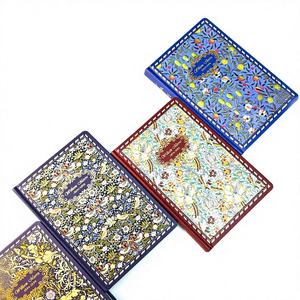
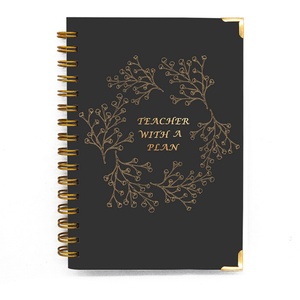


Advanced continuous-feed die-cutting and high-speed automated folding lines ensure precise edge alignment within ±0.3mm tolerances across high-volume production runs.
Leveraging legacy craft standards honed since 1981, all papers feature pH-neutral chemical compositions, protecting archival documents against degradation and discoloration.
Custom adhesive application including pressure-sensitive peel-and-seal strips, traditional water-activated gumming, and non-destructive re-sealable silicone formulations.
In the evolving global paper goods and corporate stationery landscape, procurement professionals face stringent technical requirements, environmental mandates, and shifting search behavior regarding custom product performance. Sourcing premium OEM/ODM envelope sets requires an understanding of raw material composition, automated die-cutting tolerances, surface finishing chemistry, and export logistics compliance. Grounded in decades of production expertise tracing back to papercraft roots in Woodstock, NY, since 1981, this guide establishes baseline standards and procurement parameters for international business buyers.
Information Gain Insight: Modern OEM/ODM procurement extends beyond basic dimensional sizing. Structural integrity under automated postal sorting, adhesive migration control during tropical maritime transit, and FSC-certified fiber sourcing represent critical evaluation metrics for global brands.
The performance of custom envelope sets depends on paper fiber length, machine direction alignment, and grammage consistency (GSM). OEM paper conversion utilizes a spectrum of technical substrates engineered for diverse applications:
The following performance matrix defines baseline manufacturing tolerances for export-grade envelope sets and custom journal pocket additions:
| Metric Parameter | Standard Commercial Grade | Executive / Archival Grade | Testing & Inspection Protocol |
|---|---|---|---|
| Paper Grammage (GSM Tolerance) | ± 3% nominal weight | ± 1.5% nominal weight | ISO 536 / TAPPI T 410 |
| Dimensional Die-Cut Precision | ± 0.5 mm variance | ± 0.2 mm variance | Laser optical sensor check |
| Adhesive Shear Strength | > 12 N/25mm width | > 22 N/25mm width | FINAT FTM 8 matrix test |
| Opacity Index | 85% - 90% (ISO) | > 98% (High-Security Pattern) | ISO 2471 photometric check |
| Foil Stamping Adhesion | Grade 4B tape test | Grade 5B zero-flake pull | ASTM D3359 cross-hatch |
| Archival Stability Index | pH 6.5 - 7.5 | pH 8.0 - 9.5 (Acid/Lignin Free) | ANSI/NISO Z39.48-1992 |
Failure in envelope functionality often stems from poor adhesive selection or degradation during long-distance maritime container shipping. ODM factories must tailor adhesive chemistry to ambient humidity, thermal shifts, and shelf-life expectations:
Featuring a hot-melt synthetic rubber adhesive protected by a silicone-coated PET or glassine release strip. This closure offers an extended shelf life (up to 3 years stored at 15–25°C) and instant, high-tack permanent bonding without requiring water activation. Ideal for luxury stationery retail and e-commerce packaging.
Formulated from re-moistenable natural starches or polyvinyl alcohol resins. High-speed automated envelope conversion lines apply gumming along the seal flap. Precise viscosity control prevents flap warping or pre-activation during humid ocean transport.
Designed for multi-use planner accessories, card collection pockets, and educational activity sets where envelopes must open and close repeatedly without tearing the paper fibers.
To establish market differentiation, corporate buyers demand customized visual effects and tactile embellishments. Modern ODM production lines incorporate modular finishing technologies:
Procurement teams navigating international markets must align with macro market shifts, environmental regulations, and intelligent packaging developments:
Global plastic bans and Extended Producer Responsibility (EPR) regulations are accelerating demand for 100% plastic-free envelope sets. Traditional plastic window films are giving way to translucent wood-pulp vellums, while synthetic release liners are replaced by recyclable paper-based backing paper.
Driven by memory-keeping, bullet journaling, and premium card collecting markets, buyers seek acid-free and lignin-free certifications. Non-yellowing papers ensure document preservation over multi-decade lifespans, aligning with established craft heritage standards.
Envelope dimensions must seamlessly interface with high-speed automated insertion machines (such as Pitney Bowes or Kern units). Modern factories utilize optical machine-vision check-systems to guarantee dimensional uniformity across multi-million-unit batches.
Executing an OEM/ODM manufacturing contract with overseas factories requires robust quality assurance protocols to safeguard brand equity. Importers should enforce a three-stage audit structure:
Detailed technical answers for corporate sourcing agents, product designers, and wholesale distributors.
Consult with our structural paper engineers and export specialists to obtain tailored material specifications, tooling quotes, and sample press kits for your enterprise product line.
Send an Inquiry