Precision-milled card stock substrates, custom-bound daily planners, and archival journal solutions direct from certified manufacturing facilities.


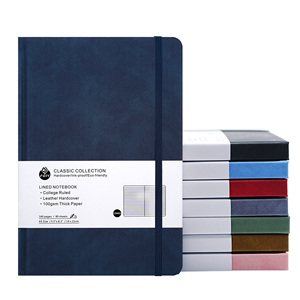
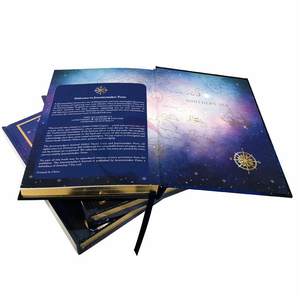
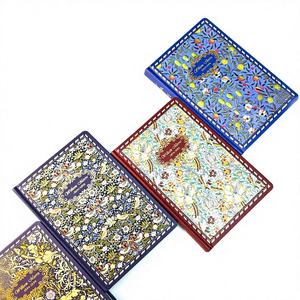
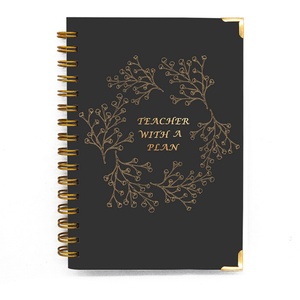
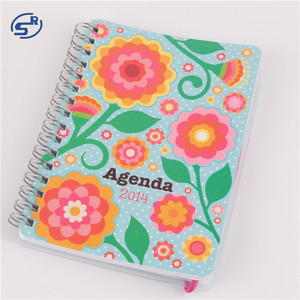

In the contemporary paperboard and paper conversion industry, sourcing high-grade card stock from Chinese manufacturers requires a detailed understanding of pulp chemistry, calendering mechanics, fiber orientation, and mechanical strength thresholds. As global publishers, commercial stationers, packaging brands, and office product distributors scale their supply chains, China’s industrial mill infrastructure has evolved into the definitive nexus for both raw card stock manufacturing and finished OEM product conversion.
Modern card stock production is no longer governed solely by basic basis weight (GSM). Advanced procurement strategies require quantitative metrics across tensile index, Mullen burst strength, Taber stiffness, ISO brightness values, and surface coating receptivity. Whether specifying Solid Bleached Sulfate (SBS) board, Folding Boxboard (FBB), or unbleached Kraft substrates for commercial stationery, understanding these technical parameters allows procurement teams to secure optimum price-to-performance ratios while maintaining total archival stability.
Technical Information Gain: Standard commercial papers suffer from fiber structural degradation under high humidity. Certified China mills utilize double-disc refiners and alkaline sizing (AKD) to produce acid-free, lignin-free card stock substrates with zero hydrolytic degradation across 100+ year archival shelf lives.
Selecting the ideal card stock specification depends directly on the mechanical stress, print method, and finishing embellishments required for the target application:
| Substrate Grade | GSM Range | Caliper (µm) | Pulp Source | Primary B2B Application |
|---|---|---|---|---|
| Solid Bleached Sulfate (SBS) | 200 – 400 GSM | 250 – 520 | 100% Virgin Hardwood/Softwood | Luxury Planner Covers, High-End Card Books, Packaging |
| Folding Boxboard (FBB) | 215 – 380 GSM | 300 – 650 | Chemical Outer / Mechanical Core | Tabbed Index Dividers, Heavy Duty Binder Pockets |
| Acid-Free Woodfree Card | 100 – 190 GSM | 120 – 240 | Elemental Chlorine Free (ECF) | Archival Planner Refills, Fountain Pen Journals |
| Unbleached Kraft Board | 180 – 450 GSM | 230 – 600 | Unbleached Virgin Pulp | Eco-Friendly Planner Covers, Rustic Stationery |
| Duplex Board (Grey Back) | 230 – 450 GSM | 310 – 580 | Recycled Post-Consumer Fiber | Rigid Box Shells, Slipcases, Puzzle Backing |
Precision paper transformation backed by decades of mechanical expertise, strict quality assurance, and international compliance standards.
Online multi-stage blade coaters deliver immaculate smooth surface gloss and matte finishes with micro-caliper uniformities under ±2% tolerance.
100% Acid-free and lignin-free chemical pulp processes prevent paper yellowing, brittleness, and ink bleed-through over extended lifespans.
Fully integrated High-speed Heidelberg printing, Bobst automatic die-cutting, Kolbus hardcover line, and Swiss Smyth sewing machinery.
Complete traceability from sustainably managed pine and eucalyptus forests through to finished exported stationery products worldwide.
Full-spectrum OEM capability for metallic 6-ring binders, dual Wire-O coils, reinforced corner guards, and custom elastic closures.
X-Rite spectrophotometer color management ensuring exact Pantone matching (ΔE < 1.0) across massive batch production runs.
Direct sourcing from top-tier Chinese paper mills and conversion factories eliminates intermediary markup while granting complete engineering control over the structural integrity of card stock products. The transformation of raw pulp into retail-ready daily planners, refillable binder organizers, and heavy-duty notebook journals spans five distinct industrial phases:
Virgin wood fibers are subjected to mechanical disc refining to optimize hydration and surface area bonding. Alkyl Ketene Dimer (AKD) neutral sizing agents are introduced alongside calcium carbonate fillers. This chemistry guarantees that the resulting card stock exhibits high opacity, neutral pH (7.5 – 8.5), and optimal resistance to atmospheric moisture absorption.
The pulp slurry is deposited onto continuous wire screens where vacuum dewatering establishes uniform sheet formation. Multi-cylinder steam drying passes shrink-stabilize the sheet, followed by inline calendering nips that compress the fiber network to deliver strict caliper (thickness) consistency across the web width.
For C1S (Coated 1 Side) and C2S (Coated 2 Sides) card stock grades, mineral clay coatings consisting of kaolin and calcium carbonate are applied via air-knife or trailing blade system. The sheet then undergoes supercalendering, creating an ultra-smooth printing substrate capable of high-definition offset lithography, thermal foil stamping, and tactile embossing.
Master rolls are converted into sheets or narrow rolls using automated rotary slitters. Hydraulic steel-rule die systems stamp index tabs, binder punch holes, rounded corners, and structural scoring lines with dimensional tolerances held within ±0.15mm.
Depending on product specifications, card stock signatures are bound via Smyth sewing for 180° lay-flat performance, spiral-bound with nylon-coated steel Wire-O coils, or mounted into heavy-duty 6-ring binder mechanisms with riveted spine plates.
The global commercial card stock and OEM stationery market is undergoing significant operational shifts driven by stringent environmental mandates, digital-physical hybrid planning workflows, and heightened buyer expectations for sensory tactility. Procurement officers analyzing the China manufacturing market must align their supply strategies with three dominant macro trends:
Regulatory frameworks such as the EU Deforestation Regulation (EUDR) require complete digital chain-of-custody tracking for paper imports. Leading Chinese factories have fully aligned their pulp sourcing with FSC (Forest Stewardship Council) and PEFC standards. Concurrently, traditional plastic laminations (BOPP) are rapidly being replaced by bio-degradable dispersion coatings and PLA films, allowing card stock products to enter standard paper recycling streams without polymer contamination.
Retail market analysis indicates a major shift from traditional dated annual planners to undated, modular, refillable binder systems. Consumers seek high-GSM card stock inner refills (100–140 GSM) that accommodate heavy fountain pen inks, markers, and decorative stickers without ghosting or feathering. Manufacturers who offer modular 6-ring binder setups with swappable card stock dividers provide buyers with a continuous revenue stream via refill packs.
In saturated consumer markets, visual appeal alone is insufficient. B2B buyers are demanding complex surface embellishments, including soft-touch velvet laminations, 3D cold foil transfer, metallic edge gilding, and deep blind debossing on high-bulk SBS cover boards. China’s advanced conversion plants lead global capacity in combining these multi-step processes on fully automated inline machinery.
Tracing its operational philosophy to early papercraft design traditions established in Woodstock, New York since 1981, our manufacturing alliance combines over four decades of artistic design sensitivity with China’s massive industrial paper manufacturing capacity. This dual heritage provides global brand partners, wholesale buyers, and corporate clients with unmatched structural and logistical advantages:
Proven Production Rigor: Over 40 years of paper product engineering experience ensures every batch of card stock meets stringent international archival, safety, and mechanical strength standards.
Crucial technical and logistical insights for procurement directors, product managers, and supply chain operators evaluating China card stock factories:
Request comprehensive paper sample swatches, structural engineering advice, and factory-direct B2B quotation matrices tailored to your product portfolio.