Choosing a dependable source for Decorative Washi Tape Sets takes more than browsing colorful product photos. Buyers need to compare print clarity, paper texture, adhesive performance, and consistency across batches. A set may look charming online, yet feel too thin or leave residue on a journal page. Small details matter.
This guide introduces ten suppliers in China and the practical questions worth asking before requesting a quote. It considers product range, customization options, minimum order quantities, sample availability, packaging, and communication. For instance, clear printing around tiny floral motifs can reveal more about production control than a broad catalog. Ask for samples and confirm specifications directly. A polished catalog is not proof of dependable quality.
Supplier information can change, and published claims may not answer every sourcing question. Some details still need direct confirmation. Use this overview as a starting point, not a guarantee or endorsement. Comparing written specifications with physical samples can help buyers make a more informed decision and avoid mismatched expectations.
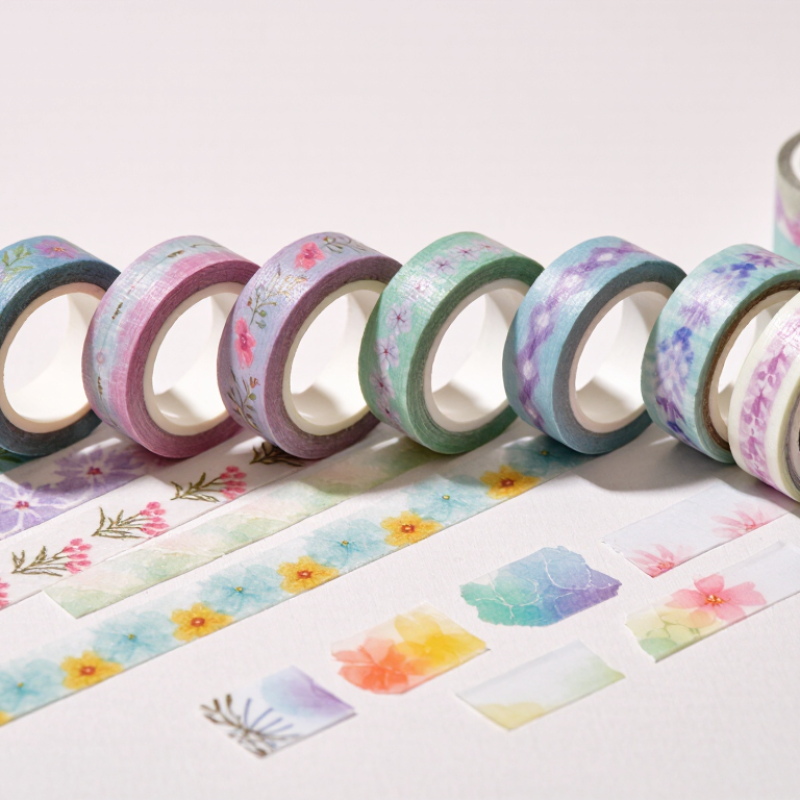
Decorative washi tape is a lightweight, paper-based pressure-sensitive tape used for both decoration and simple organization. Its translucent colors and printed patterns add detail without bulky layers. It can be torn by hand, and often lifts more gently than permanent tape, though results depend on the surface. Try it on journal pages, greeting cards, gift wrap, or a photo border. A narrow roll fits planner grids; a wider one can create a bold stripe on a notebook cover. Small details matter.
Grand View Research’s global adhesive tapes market report valued the market at USD 75.8 billion in 2023 and projected a 5.4% compound annual growth rate from 2024 to 2030. This covers many tape categories, not washi tape alone, so it provides market context rather than a washi-specific sales figure. For a clean finish, apply tape to a dry, dust-free surface and press along the edges. Test a small patch first, especially on painted walls or delicate paper. And washi is not magic. Humidity, textured surfaces, and long storage can affect adhesion; even a pretty roll may curl at the corners.
The table below presents ten practical criteria for evaluating decorative washi tape set suppliers. It is a sourcing checklist, not a ranked list of named companies; product specifications, minimum order quantities, and available services vary by supplier.
| No. | Evaluation dimension | What to compare | Useful verification |
|---|---|---|---|
| 1 | Paper and backing material | Paper type, thickness, surface texture, and whether the product is paper-based or uses another substrate. | Request a material specification and physical samples; check opacity, flexibility, and tear behavior. |
| 2 | Adhesive performance | Initial tack, removability, residue, and performance on intended surfaces. | Test samples on paper, card, and other target surfaces for the planned use and duration. |
| 3 | Print quality and color consistency | Line sharpness, color matching, registration, and consistency across rolls and production batches. | Approve a pre-production sample and agree on color references and inspection tolerances. |
| 4 | Set composition and dimensions | Roll count, tape width and length, pattern assortment, and packaging configuration. | Confirm the dimensions and quantity for every roll in the set on the quotation and product specification. |
| 5 | Design and customization options | Custom artwork, repeat patterns, colors, finishes, and packaging artwork. | Ask about artwork file requirements, proofing steps, setup charges, and design ownership terms. |
| 6 | Finishes and special effects | Options such as foil accents, metallic effects, or other decorative finishes, where available. | Check a finished sample for appearance, adhesion, and durability; confirm any effect is included in the quoted specification. |
| 7 | Quality control | Inspection procedures for print defects, winding, roll edges, quantity, and packaging. | Request the inspection checklist and clarify how defects, replacements, or credit claims are handled. |
| 8 | Minimum order and pricing structure | Minimum order quantity, sample charges, customization costs, and price breaks. | Compare written quotations using the same set contents, specifications, packaging, and delivery terms. |
| 9 | Lead time and production planning | Sample schedule, production estimate, capacity planning, and shipping preparation time. | Get estimated dates in writing and confirm how changes to artwork or order quantities affect the schedule. |
| 10 | Packaging, labeling, and intended use | Retail presentation, protective packing, labeling language, and suitability for uses such as journaling, crafts, or gift wrapping. | Confirm packaging dimensions and labeling requirements; test the tape for the specific surfaces and conditions customers will use. |
Decorative washi tape sets are commonly used for journaling, scrapbooking, paper crafts, gift wrapping, and decorating planners or stationery. Adhesion and removability depend on the tape construction and the surface, so sample testing is recommended before placing a bulk order.
It is lightweight, paper-based tape with printed patterns and translucent colors. You can tear it by hand.
Try it on journal pages, greeting cards, gift wrap, or photo borders. A narrow roll fits planner grids.
No. Humidity, texture, and long storage can weaken adhesion. Corners may curl.
Use a dry, dust-free surface. Press along the edges, then check for lifting.
It may lift more gently than permanent tape, but results vary. Test a small patch first.
Check clean cuts, even adhesion, and consistent colors. I would test more than one roll; one sample may not tell the whole story.
Ask for material specifications and confirm roll width, length, core size, and packaging. A low price can hide short rolls.
No. The reported 141.05 million tonnes covers paper and paperboard production, not washi tape specifically. It only shows the scale of the wider paper supply base.
This article explores how Decorative Washi Tape Sets combine color, pattern, and practical function for journaling, gift wrapping, scrapbooking, craft projects, and everyday organization. It explains how China’s supplier market is structured, from manufacturers with in-house production to sourcing partners that coordinate design, printing, and packaging. Readers will also learn how to compare suppliers by reviewing product variety, material consistency, printing quality, production capacity, communication, and order flexibility.
The guide profiles ten types of suppliers in China without relying on brand promotion, then outlines key steps for sourcing and customization. Buyers can consider pattern development, tape dimensions, adhesive performance, packaging options, and minimum order quantities when discussing a project. Before placing a larger order, requesting samples and checking color accuracy, clean cutting, adhesion, and packaging can help assess whether the finished sets meet expectations.