Choosing Functional Planner Stickers for 2026 is not simply a matter of picking attractive colors. The right stickers should make planning faster, clearer, and easier to maintain during busy weeks. A tiny appointment label can prevent a missed meeting. A meal-prep sticker can turn a blank Sunday page into a practical routine.
Ryder Carroll, creator of the Bullet Journal method, has said, “The goal is not to get more done, but to live with more intention.” That principle remains useful when evaluating Functional Planner Stickers. Stickers should support decisions, not create another decorating task. Look for readable lettering, removable adhesive, useful categories, and sizes that fit your actual planner layout. Test one sheet before buying a large collection. Some stickers look excellent online but feel crowded on paper.
Material quality also matters in 2026. Matte stickers are usually easier to write on, while transparent designs can preserve important page details. Weather-resistant paper may help users who carry planners between home, school, and work. However, “premium” does not always mean practical. I have found that a simple icon used weekly can be more valuable than an elaborate sheet used once.
Personal planning habits change. A sticker set that works for a student may frustrate a project manager. Consider your schedule, handwriting space, color preferences, and planning frequency. Then compare function, durability, and price together. The perfect set may not exist. That is worth remembering. A flexible, imperfect system often survives longer than a beautiful one that demands too much attention.
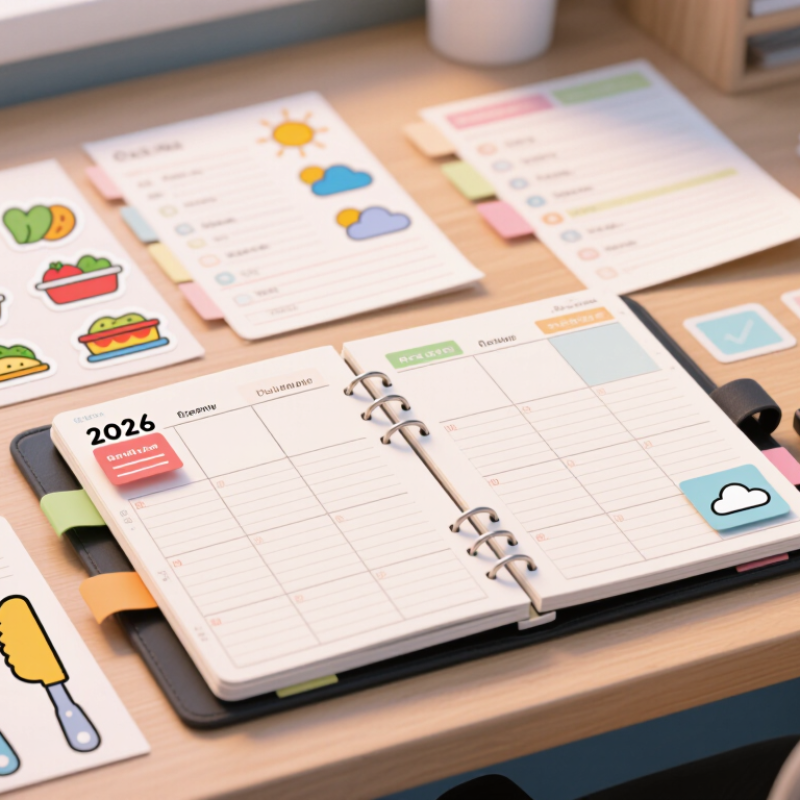
How to Choose Functional Planner Stickers for 2026?
Functional planner stickers are small planning tools, not merely decorations. They mark appointments, deadlines, habits, chores, and recovery time. In my weekly planning practice, a simple icon often works faster than a long note. A calendar should reduce mental clutter. It should not create another task. Choose stickers with clear symbols, readable text, and enough writing space around them. For 2026, consider stickers that support digital appointments, flexible work, health routines, and changing priorities. Avoid buying a large set before testing its size and adhesive.
Tips: Place one sticker on a sample page first. Check whether it lifts cleanly after one day. Use different shapes for fixed events and movable tasks. Keep urgent reminders visible, but do not cover important dates. Matte surfaces are usually easier to write on with ordinary pens. Tiny stickers look attractive. They can become frustrating.
A reliable system should match your actual behavior, not an imagined perfect routine. If you often postpone tasks, use a reschedule marker instead of pretending every plan is fixed. I once chose labels that looked organized but left no room for notes. That choice failed. Review your planner after two weeks. Notice which stickers you ignore, move, or use repeatedly. Then adjust the layout, colors, and quantity. Functional value matters more than a polished spread.
| Sticker Function | Typical Use | Best Planner Layout | Common Format | Writing Requirement | Recommended Adhesive | Key Selection Tip |
|---|---|---|---|---|---|---|
| Appointment | Marks meetings, classes, appointments, and reserved time. | Monthly calendar or vertical weekly spread. | Small icons, labels, or short writable blocks. | A smooth matte surface supports fine-tip pens. | Removable adhesive for schedule changes. | Choose a size that fits the planner’s date boxes without covering adjacent entries. |
| Checklist | Groups errands, work steps, study tasks, or household routines. | Daily, weekly, or task-list pages. | Checkbox strips, bullet lists, or task headers. | Writable space should be wide enough for brief task descriptions. | Permanent adhesive for fixed routines; removable for flexible lists. | Select clear checkboxes and enough writing space for the average task length. |
| Priority | Highlights urgent, important, or high-impact tasks. | Daily pages, weekly dashboards, or project plans. | Stars, flags, exclamation marks, or colored labels. | Usually requires little or no writing. | Either removable or permanent, depending on whether priorities change. | Use a consistent visual code so priority levels can be recognized quickly. |
| Deadline | Identifies due dates, submission dates, renewals, and milestones. | Monthly calendar, project timeline, or weekly spread. | Date labels, arrows, flags, or narrow event markers. | A writable label is useful when the date or project name is not preprinted. | Removable adhesive allows dates to be moved when plans change. | Choose high-contrast designs that remain readable at a glance. |
| Habit Tracker | Records repeated actions such as reading, hydration, exercise, or sleep routines. | Monthly habit grid or weekly tracker. | Dots, check marks, mini calendars, or repeated symbols. | Minimal writing is needed; symbols and color coding are usually sufficient. | Permanent adhesive works well for fixed tracker layouts. | Pick a compact design that can be repeated without overcrowding the page. |
| Meal Planning | Organizes meals, grocery reminders, preparation days, and leftovers. | Weekly meal planner or household dashboard. | Meal labels, utensil icons, grocery headers, or writable strips. | A matte, writable surface is preferable for changing meal details. | Removable adhesive is useful when meals are rescheduled. | Choose designs with enough room for meal names or short grocery notes. |
| Budget and Finance | Tracks bills, payment dates, savings goals, and spending categories. | Monthly budget spread or finance worksheet. | Bill labels, currency symbols, savings headers, or category tabs. | Writable matte paper is suitable for amounts and payment notes. | Removable adhesive supports recurring monthly planning. | Use a clear color system for income, fixed costs, variable costs, and savings. |
| Project and Milestone | Visualizes project phases, deliverables, review points, and completion stages. | Timeline, Kanban-style page, or project dashboard. | Arrows, labels, phase markers, and progress indicators. | Writable labels help identify project names and milestones. | Removable adhesive is generally more practical for changing timelines. | Match sticker width to timeline columns and avoid blocking date information. |
| Notes and Section Tabs | Separates subjects, marks reference pages, and provides quick navigation. | Notebook, disc-bound planner, ring planner, or journal. | Page flags, edge tabs, writable labels, or narrow strips. | Writable labels are useful for custom categories. | Removable adhesive reduces the risk of damaging pages during reorganization. | Check tab placement, paper thickness, and whether the sticker extends beyond the page edge. |
They should solve planning problems, such as marking appointments, deadlines, bills, habits, or errands. Decoration alone is not enough.
Measure one daily writing box first. Small dots suit compact planners, while narrow strips fit vertical layouts.
Matte paper usually accepts pencils, gel pens, and ballpoint pens more reliably. Glossy surfaces may cause smearing.
Removable adhesive suits appointments that may change. Test one sticker on a hidden page before using many.
Vinyl resists moisture and feels durable, but some pens dry slowly on it. Thick stickers can make softcover pages close poorly.
Give each category one color, such as blue for work or green for health. Three to five colors are usually easier to read.
Use clear icons, restrained colors, and enough writing space. A small clock can represent an appointment, while a square can mark a task.
Start with your real schedule. Choose stickers for fixed events, movable tasks, habits, meals, recovery, and financial reminders.
Use the system for two weeks. Record which stickers you use, ignore, or place repeatedly.
Choosing the right Functional Planner Stickers for 2026 begins with understanding how they can support everyday organization. These stickers are designed to mark tasks, appointments, habits, deadlines, priorities, and personal routines in a clear and efficient way. Before buying, consider your planning needs, such as work scheduling, study tracking, meal planning, budgeting, wellness goals, or family activities. A practical sticker system should match the way you naturally use your planner rather than make it more complicated.
When comparing options, review sticker types, sizes, materials, and layouts to ensure they fit your planner pages and writing style. Consider whether you prefer compact icons, checklist strips, labels, or larger decorative-functional formats. Durability is also important, especially if the planner is carried frequently, while writing compatibility ensures notes remain neat and readable. By combining useful categories, consistent placement, and a manageable color or symbol system, you can create a flexible planning method that improves focus, saves time, and supports your goals throughout 2026.