FREE ground shipping on U.S. orders $25+  •  Designed & printed in Woodstock, New York since 1981
0%

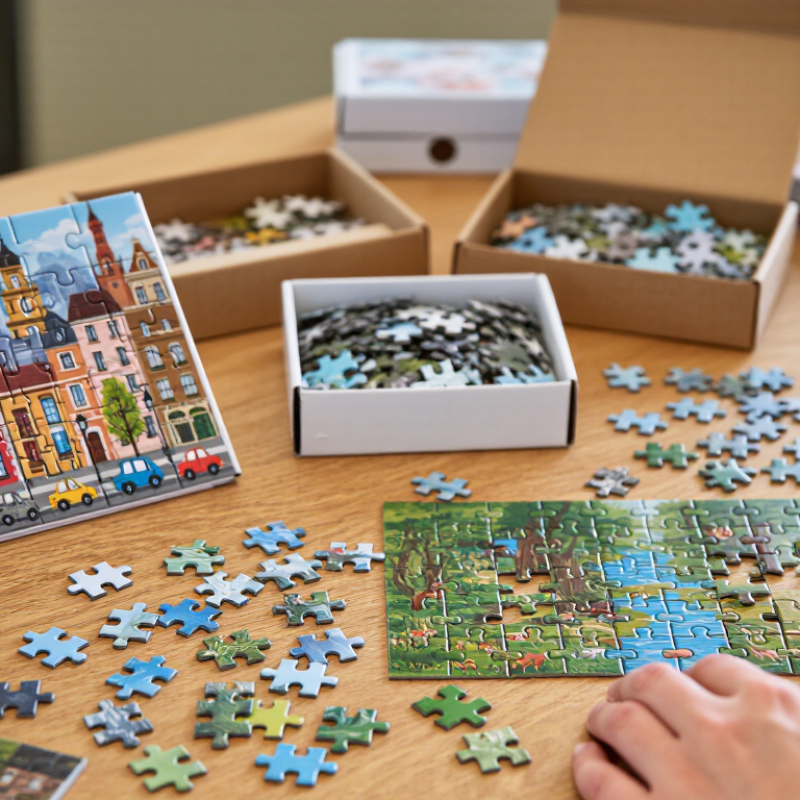
Choosing Double Sided Mini Puzzles for global sourcing requires more than comparing unit prices. Buyers must assess play value, print quality, packaging efficiency, safety documentation, and repeat-order reliability. A small puzzle may contain hundreds of visual details. Poor registration can make both sides look blurred. Weak cardboard can bend inside a humid shipping carton.

Market evidence supports careful selection. Circana’s Global Toy Industry Performance report recorded a 7% decline in global toy sales during 2023. However, games and puzzles remained comparatively resilient as families sought affordable, screen-free entertainment. This shift matters for importers. Compact products can reduce storage pressure and support impulse purchases, but only when perceived quality remains strong. Grand View Research also identifies puzzles as a growing recreational product category, driven by gifting, education, and adult hobby demand.

Safety cannot be treated as a final paperwork task. Suppliers should provide current testing evidence aligned with target-market requirements, including EN 71 for Europe or ASTM F963 for the United States, where applicable. Ask for material specifications, ink information, edge-quality checks, and batch-level inspection records. Request pre-production samples. Test both puzzle surfaces under bright light. Then examine pieces after repeated assembly.

Price is only one signal. Factory experience, color consistency, carton protection, and communication speed often determine the real sourcing cost. The category is not perfectly predictable. A beautiful sample may hide weak production control. That possibility deserves attention. This guide explains how to compare Double Sided Mini Puzzles suppliers, validate product claims, and build a more dependable global purchasing decision.

How to Choose Double Sided Mini Puzzles for Global Sourcing?

Define the Specifications of Double-Sided Mini Puzzles

How to Choose Double Sided Mini Puzzles for Global Sourcing?

Define the Specifications of Double-Sided Mini Puzzles

From practical sourcing experience, clear specifications prevent expensive misunderstandings. Define the finished size, piece count, and assembled thickness. State whether measurements allow production tolerance. A compact puzzle may need pieces under two centimeters wide. Confirm that children can handle them safely. Specify the board material, surface coating, and edge finish. Double-sided printing requires accurate registration between both images. Ask suppliers to provide color references and a physical sample.

Tips: Request a cutting template before mass production. Check both sides under bright, neutral light. Measure the sample, not just the product sheet. Small errors become obvious on mini puzzles. Keep written records of every approved detail.

For global orders, define packaging specifications carefully. Include the inner box size, unit count, and carton arrangement. Mention barcode placement, language requirements, and moisture protection. Confirm the shipping carton’s weight and dimensions before booking freight. Request pre-production samples and inspection photos. Set reasonable tolerances for cutting, color, and print alignment. I still miss small details sometimes, especially when reviewing digital proofs. That is why physical checks matter. A specification can look complete and still leave room for confusion.

Compare Materials, Printing Methods, and Puzzle Construction

For global sourcing, material choice

controls both feel and failure rate. Greyboard gives mini puzzles a firm, premium hand. Recycled board lowers virgin fiber demand, but fibers may reduce edge strength. The U.S. EPA’s latest comprehensive data reported a 68.2% paper and paperboard recycling rate. Treat that figure as a baseline, not a guarantee. Ask suppliers for board thickness, moisture resistance, and recycled content evidence. A 1.2–1.8 mm board often balances portability and rigidity, but very small pieces may still bend.

Printing requires closer control

on double-sided artwork. Offset printing suits larger orders and delivers stable color after setup. Digital printing supports smaller batches and variable artwork, but unit costs can rise. Smithers’ packaging print research identifies digital production as a continuing growth area, especially for shorter runs. Request wet-rub, scratch, and color-registration tests. Back-to-front alignment matters. A slight shift can make the puzzle look poorly cut. Puzzle market estimates also show continuing demand growth, including Grand View Research’s reported 5.1% forecast CAGR through 2030. That does not prove every niche will grow.

Tips:

Specify a registration tolerance, such as ±0.3 mm, during quotation. Test three construction samples before ordering. Compare die-cut edges under magnification. Check whether adhesive lamination curls after 48 hours. Ask for a pre-production proof. I would not trust a perfect sample alone. Real factories vary. Suppliers should also provide carton-drop results and packaging dimensions, because tiny puzzles can lose pieces during transport. A cheaper board may become the expensive option.

Assess Suppliers, Certifications, and Manufacturing Capabilities

Choosing Double Sided Mini Puzzles for Global Sourcing

A reliable supplier should prove more than a low quotation. Request recent production samples, factory photos, and a clear process map. Check whether the sample shows accurate front-and-back registration, clean die cuts, and consistent piece thickness. Small puzzles expose defects quickly. Misaligned artwork can make the reverse image look careless.

Review certifications against your destination markets, not a generic document folder. Ask for valid ISO 9001 records, material declarations, and applicable toy-safety test reports. Depending on the market, requirements may include EN 71, ASTM F963, CPSIA, or chemical restrictions such as REACH. Confirm the certificate holder, factory address, product scope, and expiration date with the issuing body. A certificate alone does not guarantee every shipment passes inspection.

Manufacturing capability matters at miniature sizes. The supplier should explain board selection, offset or digital printing, lamination, die-cutting, dust removal, and final counting. Ask about color control, batch traceability, and carton compression testing. A capable factory can provide a pre-production sample and retain reference samples from each lot. I have learned that an impressive showroom proves little. A live line check is more useful. Still, even careful suppliers make occasional errors, so define acceptance limits, inspection stages, and corrective-action timing in writing. Do not rely on verbal promises.

How to Choose Double Sided Mini Puzzles for Global Sourcing? - Assess Suppliers, Certifications, and Manufacturing Capabilities
Supplier Profile Production Model Typical MOQ Monthly Capacity Double-Sided Puzzle Capability Relevant Certifications and Compliance Evidence Quality-Control Process Sample Lead Time Export Readiness Assessment Score
Profile A
Established paper-product factory
Integrated printing, laminating, die-cutting, and packing 1,000 sets per design 80,000–120,000 sets Strong
Supports double-sided offset printing, laminated board, and small-piece die-cutting
ISO 9001 available for verification;
ASTM F963 and EN 71 test reports can be arranged;
FSC chain-of-custody evidence requested for certified paper
Incoming material inspection, color proof approval, first-article inspection, AQL final inspection 7–12 working days Experienced with carton labeling, export packing, and container loading documentation 88/100
Profile B
Medium-size game manufacturer
Printing and assembly with selected processes subcontracted 2,000 sets per design 50,000–90,000 sets Strong
Experienced with front-and-back registration and mixed puzzle formats
ISO 9001 certificate stated;
CPSIA-related testing available for the United States;
EN 71 testing available for the European market;
Verify certificate scope and validity
Digital artwork preflight, color control, die-line approval, assembly checks, random final inspection 10–15 working days Suitable for retail-ready packaging and multilingual instruction sheets 85/100
Profile C
Flexible low-MOQ workshop
Digital printing, hand assembly, and outsourced die-cutting 300–500 sets per design 10,000–25,000 sets Moderate
Suitable for short runs; registration tolerance and piece consistency require close approval
Certification status varies by project;
Request current EN 71, ASTM F963, REACH, and heavy-metal test reports before production
Manual sampling, visual inspection, packing count checks, limited automated measurement 5–9 working days Can support small export orders; verify packaging, labeling, and customs-document capability 72/100
Profile D
High-volume automated plant
Automated offset printing, board mounting, die-cutting, and packing lines 5,000 sets per design 150,000–250,000 sets Very strong
High-speed registration control and automated counting for miniature pieces
ISO 9001 and ISO 14001 claimed;
ASTM F963, EN 71, and REACH documentation available on request;
Confirm product-specific test coverage
Barcode-controlled production, color-density checks, first-piece approval, inline inspection, AQL final audit 12–18 working days Strong container-scale logistics and export documentation processes 92/100
Profile E
Eco-focused paper converter
Recycled-board conversion, water-based coating, printing, and packing 1,500 sets per design 35,000–70,000 sets Good
Supports recycled board and double-sided printing; confirm minimum piece-size limits
FSC material documentation available when specified;
ISO 14001 stated;
Request REACH and EN 71 test reports for the finished product;
Confirm coating and ink specifications
Board moisture checks, print inspection, coating adhesion check, die-cut sampling, packing audit 10–16 working days Suitable for sustainability-focused packaging and paper traceability requirements 84/100
Profile F
Trading and sourcing office
Coordinates production through external printing and assembly factories 500–1,000 sets per design Dependent on nominated factory Variable
Capability depends on the assigned production partner and approved sample
Certification documents must be linked to the actual manufacturing site;
Require factory audit, test reports, and product traceability before purchase order approval
Pre-shipment inspection arranged by the sourcing office; factory-level controls require independent verification 8–14 working days Can consolidate shipments and manage multilingual communication; verify responsibility for compliance records 68/100
Assessment basis: double-sided print registration, miniature-piece consistency, material traceability, product-safety documentation, quality-control depth, lead time, minimum order quantity, and international shipping readiness. Certification claims should be validated through current certificates, test reports, factory audits, and product-specific compliance records before purchase-order approval.

Verify Product Quality Through Samples and Inspection Standards

When sourcing double-sided mini puzzles, approve a physical sample before discussing large-volume pricing. Digital images can hide blurred printing, rough cuts, and weak cardboard. A reliable sample should show both designs clearly, with accurate color and clean alignment. Check the edges.

Measure the finished size, board thickness, piece count, and package dimensions. Test several pieces by hand. They should separate without tearing, yet remain firm during assembly. Inspect the reverse-side print for smudges, exposed fibers, and uneven coating. A sharp paper odor may indicate poor material control. It deserves investigation, not dismissal.

Create a written inspection standard before production begins. Include acceptable color variation, maximum edge damage, missing-piece limits, and packaging tolerances. Use a retained “golden sample” for comparison. For larger orders, perform an in-process check and a final random inspection using a defined sampling level, such as AQL. Record carton numbers, defect photographs, measurements, and inspector comments. This evidence supports fair decisions when quality changes between batches. A sample can pass while mass production fails. I have seen this happen after cutting pressure changed. Leave room for correction. Recheck the first production cartons before approving the full shipment.

Plan Global Sourcing Costs, Shipping, and Import Compliance

How to Choose Double Sided Mini Puzzles for Global Sourcing?

Global sourcing costs extend beyond the quoted unit price. For double-sided mini puzzles, calculate printing, cutting, packaging, inspection, freight, duties, taxes, and storage. A low factory quote can hide expensive finishing requirements. Ask for a costed sample with both puzzle images, paper thickness, coating, and packing details. Separate one-time tooling costs from repeat production costs. My early estimates were too optimistic because I ignored carton volume and destination handling fees. Small errors compound.

Shipping decisions can change the final margin quickly. Double-sided puzzles may need protective sleeves or rigid cartons to prevent corner damage. Request carton dimensions, gross weight, units per carton, and pallet details before booking transport. Compare ocean, air, and consolidated freight using the same delivery terms. Include port fees, customs brokerage, inland delivery, and possible storage charges. Keep a buffer. A realistic reserve is better than a perfect spreadsheet that fails during peak season.

Import compliance begins with accurate product information. Confirm the tariff classification, country of origin, materials, inks, packaging, and intended age group. Requirements differ by destination, especially for children’s products. Ask suppliers for current test reports, material declarations, labeling files, and traceable production records. Check whether warnings, language, recycling marks, or importer details are required. A customs broker can review documentation before shipment, but responsibility still needs clear ownership. Do not guess. Recheck every document when artwork or packaging changes.

FAQS

What specifications should be confirmed before ordering double-sided mini puzzles?

Confirm finished size, piece count, thickness, board material, coating, and edge finish. Small details matter. State acceptable production tolerances clearly.

Why is a physical sample necessary?

Digital proofs may hide blurred colors, rough cuts, or weak cardboard. Inspect both sides under bright, neutral light. Measure the sample directly, not only the product sheet.

How can buyers check double-sided print alignment?

Compare both images around corners, edges, and small details. Misalignment becomes obvious on compact pieces. Request a cutting template before mass production.

What should packaging specifications include?

Define inner box size, unit quantity, carton arrangement, barcode placement, and language requirements. Also confirm moisture protection. Record carton weight and dimensions before freight booking.

How should suppliers be evaluated?

Request recent samples, factory photos, process details, and production-line evidence. Check printing, die-cutting, dust removal, counting, and traceability. A polished showroom proves little.

Which compliance documents should buyers review?

Review valid quality records, material declarations, and applicable toy-safety reports. Check the certificate holder, factory address, product scope, and expiration date. A certificate alone cannot guarantee every shipment passes inspection.

What quality tests should be performed on puzzle pieces?

Measure size, thickness, piece count, and packaging dimensions. Test several pieces by hand. They should separate without tearing and stay firm during assembly. Inspect smudges, exposed fibers, uneven coating, and strong odors.

How can mass-production quality be controlled?

Create written limits for color variation, edge damage, missing pieces, and packaging errors. Keep a retained reference sample for comparison. Use in-process checks and final random inspections. I sometimes miss details in digital reviews. Physical checks correct that weakness.

What records should be kept during inspection?

Record carton numbers, measurements, defect photos, sampling levels, and inspector comments. Recheck the first production cartons before approving the shipment. A sample can pass while mass production fails. That risk deserves attention.

Conclusion

Choosing Double Sided Mini Puzzles for global sourcing requires a clear understanding of product specifications, including puzzle size, piece count, artwork requirements, packaging format, and intended age range. Buyers should compare material options, printing methods, surface finishes, cutting accuracy, and construction quality to ensure the puzzles are attractive, durable, and easy to assemble. Supplier evaluation is equally important, with attention to manufacturing experience, production capacity, quality systems, relevant certifications, communication, and ability to meet customized requirements.

Before placing a large order, request samples to review color accuracy, edge fitting, print durability, packaging protection, and overall safety. Establish inspection standards for raw materials, finished products, quantity, labeling, and carton condition. A complete sourcing plan should also calculate tooling, unit, packaging, freight, insurance, duties, taxes, and potential inspection costs. Finally, confirm import documentation, product labeling, packaging rules, and destination-market requirements to support smooth, compliant, and cost-effective international delivery.

Clara

Clara

Clara is a professional marketing specialist with a strong understanding of product strategy, customer needs, and digital communication. As a key contributor to the company’s content and marketing initiatives, she regularly updates the corporate website with practical, informative blog articles......