FREE ground shipping on U.S. orders $25+  •  Designed & printed in Woodstock, New York since 1981
0%

Choosing card games for children requires more than bright artwork and a low wholesale price. For global buyers, Educational Kids Card Games must support learning, safe play, and practical distribution. This guide examines seven options through a buyer-focused lens. We consider age suitability, learning outcomes, replay value, card quality, packaging, and language flexibility. A strong game should make counting, memory, vocabulary, or problem-solving feel natural at the table. Children should understand the basic rules quickly, then discover deeper choices through repeated rounds. That balance matters in classrooms, family stores, online marketplaces, and educational programs.

Real purchasing decisions also involve details that product photos often hide. We look for readable instructions, rounded corners, durable coating, manageable deck sizes, and storage that survives frequent handling. Safety documentation and market-specific labeling should be checked with manufacturers and local authorities before importing or listing products. No single game fits every country. A language-heavy deck may work well in one region but need translation elsewhere. A simple matching game can be more useful than a complex strategy title for younger learners, although adult guidance and classroom goals still matter. We also note weaknesses, because polished packaging does not guarantee strong educational value. Some games may feel repetitive. Others may teach effectively but lack broad appeal. That is worth admitting. These seven selections are practical starting points for comparing educational value, child engagement, and purchasing confidence across international markets.
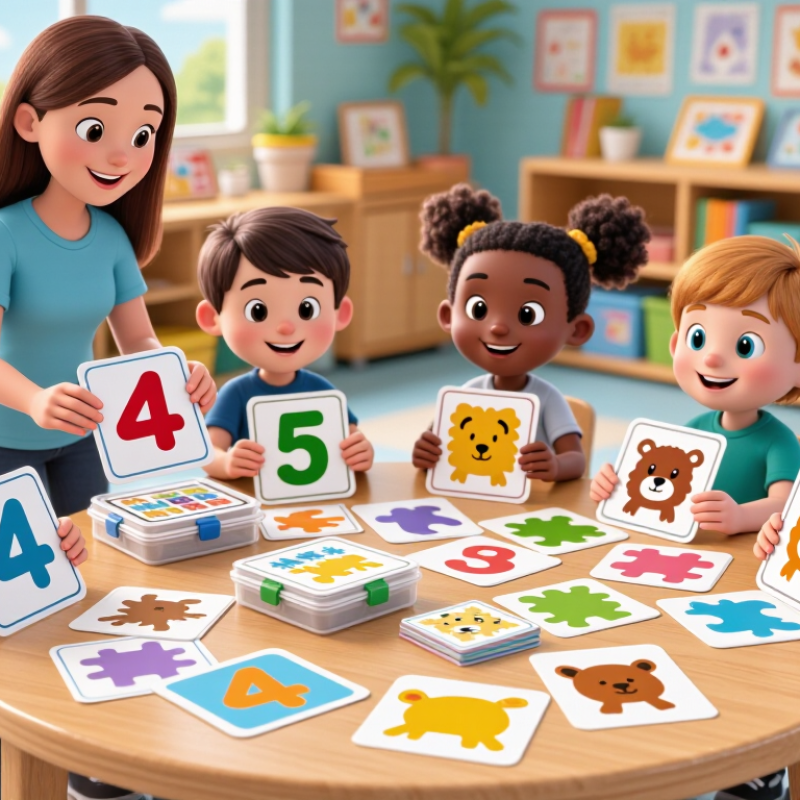
7 Best Educational Kids Card Games for Global Buyers

How to Evaluate Educational Kids Card Games for Global Markets

When evaluating the 7 Best Educational Kids Card Games for Global Buyers, start with learning value, not colorful packaging. Check whether each game practices clear skills, such as counting, vocabulary, memory, or problem-solving. Rules should fit the target age and remain understandable after translation. A useful game gives children repeated choices, quick feedback, and reasons to talk with others.

Global access also matters. UNESCO’s 2023 Global Education Monitoring Report states that only 40% of primary schools worldwide had internet access for teaching. Offline card games can therefore serve markets with limited connectivity. Review card durability, rounded corners, readable text, and safe material declarations. Compare package size and shipping weight, because these details affect landed costs. Also examine cultural images, currencies, family roles, and classroom expectations. A game may teach well in one region but confuse children elsewhere. That weakness deserves honest testing.

Tips: Ask local teachers to score language clarity, replay value, and cultural fit from 1 to 5. Run small play sessions with children before placing large orders. Record where players hesitate. Those moments reveal hidden translation or design problems. The LEGO Foundation’s 2023 learning-through-play research emphasizes active engagement, meaningful interaction, and social play. Use these principles when comparing products. Do not rely only on seller claims. Request independent safety documentation, age-testing evidence, and sample units. A beautiful prototype can still fail after repeated handling. That is easy to miss.

Seven Notable Card Games and the Skills They Develop

Memory Match strengthens visual recall and turn-taking.

Sequence Builder develops planning through numbered or illustrated patterns.

Fraction Flip makes halves, thirds, and equivalent values visible.

Word Quest supports vocabulary, spelling, and quick language retrieval.

Logic Clues trains deduction, careful listening, and evidence-based reasoning.

Budget Basket introduces addition, subtraction, and simple purchasing decisions.

World Facts encourages geography, cultural awareness, and respectful discussion.

These skills match current education priorities. The OECD’s PISA 2022 framework highlights mathematical reasoning, problem-solving, and applying knowledge in unfamiliar situations.

Card play gives children repeated, low-pressure practice with those habits. A 2023 Circana global toy industry report recorded a 7% sales decline in 2023, increasing pressure on buyers to select products with clear, demonstrable value.

For international purchasing, language-light symbols, durable cards, and adaptable rules matter. Age labels should reflect reading ability, not only birth year.

In product testing, short rounds usually keep younger players engaged. Usually.

Some children still dislike memory tasks or competitive scoring. That caveat matters.

Buyers should request safety documentation, readable instructions, inclusive illustrations, and classroom feedback before placing large orders.

The best deck is not always the most complex one. A simple sequence game may teach more when children explain each choice aloud.

Reported outcomes can also be imperfect, so sellers should avoid promising guaranteed academic improvement.

Matching Card Games With Children’s Ages and Learning Needs

Matching card games work best when the challenge fits a child’s age, attention span, and learning needs. For ages three to five, choose games with large images, thick cards, and simple matching rules. Children can practise memory, colours, animals, and everyday vocabulary without reading. Keep turns short. Three to five minutes may be enough.

Children aged six to eight often enjoy cards that add sorting, counting, spelling, or simple problem-solving. Look for clear instructions and adjustable difficulty. A game might begin with picture pairs, then introduce word cards or number sequences. For children learning another language, visual clues can reduce frustration. However, too many unfamiliar words may turn learning into guessing.

Older children can handle strategy, category building, and basic probability. Card games can support planning, flexible thinking, and respectful communication. Check whether the cards encourage cooperation or only competition. Some children learn better when they explain their choices aloud. Others need quiet time. Not every child agrees.

A practical buyer should inspect card size, print contrast, rounded edges, and instruction clarity. Age guidance is useful, but it is not a final judgement. I once assumed a simple matching game would suit every preschooler; one child found the repeated turns tiring. Offering fewer cards helped, but the game still needed movement and conversation. Learning needs change quickly, so adaptable rules matter more than impressive packaging.

7 Best Educational Kids Card Games for Global Buyers - Matching Card Games With Children’s Ages and Learning Needs
Card Game Type Recommended Age Primary Learning Need Core Skills Developed Typical Players Play Time Matching Method Global Buyer Considerations
Alphabet and Picture Matching 3–5 years Early literacy and vocabulary building Letter recognition, beginning sounds, visual association, vocabulary recall, and turn-taking 2–4 players 10–15 minutes Match an uppercase or lowercase letter with a picture beginning with the corresponding sound Use clear illustrations and offer multiple language editions or blank cards for local-language adaptation
Number and Quantity Matching 3–6 years Early numeracy and one-to-one counting Number recognition, counting, quantity comparison, subitizing, and basic mathematical language 2–4 players 10–20 minutes Match a numeral card with a card showing the same quantity of objects Use familiar objects, high-contrast numbers, and culturally neutral counting images
Sight Word and Image Matching 5–7 years Early reading fluency Word recognition, reading confidence, memory, spelling awareness, and vocabulary development 2–4 players 15–20 minutes Match a frequently used word with a related image or a duplicate word card Adapt word lists to the target language and use readable type with strong contrast
Animal and Habitat Matching 5–8 years Science awareness and environmental learning Classification, observation, ecological vocabulary, memory, and understanding of animal environments 2–6 players 15–25 minutes Match an animal with its natural habitat, food source, or life-cycle stage Select regionally familiar animals while also introducing globally recognized species
Emotion and Facial Expression Matching 4–8 years Social-emotional learning Emotion identification, empathy, communication, self-awareness, and perspective-taking 2–5 players 10–20 minutes Match an emotion word with an appropriate facial expression or everyday situation Include diverse characters and explain that facial expressions and emotional communication can vary
Opposites and Everyday Concepts 4–7 years Language development and cognitive concepts Descriptive vocabulary, comparison, categorization, listening, and verbal reasoning 2–4 players 10–15 minutes Match concept pairs such as big/small, hot/cold, open/closed, or day/night Review images for cultural clarity and provide simple translations or bilingual card options
Shape, Color, and Pattern Matching 3–6 years Visual discrimination and early problem-solving Shape recognition, color identification, pattern completion, concentration, and classification 1–4 players 10–20 minutes Match identical shapes, colors, patterns, or cards that complete a visual sequence Combine color with shape or symbols so the game remains accessible to children with color-vision differences

Age ranges are general developmental guides. Adult supervision and simplified rules may help younger children or learners who need additional support.

Checking Safety, Language, and Cultural Suitability

7 Best Educational Kids Card Games for Global Buyers

For global buyers, the best educational card games must pass more than a learning test. They need safe materials, clear instructions, and age-appropriate design. Check for rounded corners, durable cards, secure packaging, and inks suitable for children’s products. Small tokens can create choking risks, especially for younger players. Ask suppliers for recent safety test reports, material declarations, and recommended age evidence. Do not rely on attractive packaging alone.

Language quality also matters. A translated rulebook may sound correct but confuse children. Test short instructions with local teachers or parents. Check spelling, reading level, number formats, and familiar terms. Pictures should support the words, not replace them completely. Some buyers may need bilingual cards, audio support, or symbols for early readers. A useful game can fail when one unclear sentence stops play.

Cultural suitability requires careful review. Geography cards should avoid outdated borders or simplified descriptions. History and community themes should include varied families, abilities, and everyday experiences. Avoid jokes, costumes, or images that reduce a culture to one stereotype. I once assumed a friendly animal illustration was universal; local reviewers found it linked to an uncomfortable regional story. That mistake changed our review process. Now, independent educators examine sample cards before purchase, although even their feedback cannot represent every market. Keep review records, invite local comments, and revise wording when evidence shows a problem.

Comparing Pricing, Packaging, and Buying Options for Global Markets

Choosing the seven best educational kids card games requires more than checking learning value. Global buyers must compare price, packaging, and purchasing flexibility.

The strongest range usually covers memory, language, mathematics, geography, science, matching, and strategy. Grand View Research valued the global educational toys market at about US$57.1 billion in 2023, with projected annual growth above 9% through 2030. That growth creates space for carefully priced card games. Entry-level decks suit schools and discount retailers. Premium sets can include thicker cards, teacher notes, and multilingual instructions. However, higher prices do not always prove better learning outcomes. Buyers should request sample units and test card durability before placing large orders.

Packaging affects freight, shelf appeal, and waste. Compact tuck boxes reduce shipping volume, while rigid boxes protect cards during repeated classroom use. DHL’s 2024 E-Commerce Trends Report highlights delivery expectations and convenient returns as major online purchase factors. Therefore, export packaging should show dimensions, weight, language coverage, and clear product images. Recyclable materials may support sustainability goals, but they can increase unit costs or reduce moisture resistance. The trade-off deserves honest testing.

Buying options should include small trial orders, wholesale cartons, and private-label production. Circana’s global toy market reporting shows that consumer demand can shift quickly across regions, making flexible inventory useful. Yet minimum order quantities may discourage smaller distributors. A mixed-carton option could help, though it may complicate forecasting. My practical preference is simple: compare landed cost, not just factory price, and record every assumption before approval.

FAQS

What learning skills should an educational card game practise?

Look for clear skills, such as counting, vocabulary, memory, or problem-solving. Children should make choices and receive quick feedback. The learning goal should be visible during play.

How should card games differ by age?

Ages three to five need large images, thick cards, and simple matching rules. Ages six to eight can handle sorting, spelling, counting, and easy puzzles. Older children may enjoy categories, planning, and basic probability. Age labels help, but they are not perfect.

Are offline card games suitable for global markets?

Yes. Many schools still have limited internet access. Offline games work in homes, classrooms, and travel settings. They need clear printed instructions and no digital connection.

What physical qualities should buyers inspect?

Check card thickness, print contrast, rounded corners, and readable text. Examine the cards after repeated handling. A beautiful sample can wear quickly. That mistake is easy to miss.

How can buyers test language clarity?

Ask local teachers to score the wording from one to five. Let children play without constant adult explanation. Record where they pause or guess. Those moments may reveal translation problems.

Why does cultural fit matter in card games?

Images, currencies, family roles, and classroom habits can vary by region. A familiar picture in one market may confuse children elsewhere. Test examples with local teachers and families. Do not assume one version fits everyone.

How can a game support different learning needs?

Choose games with adjustable difficulty and flexible rules. Start with picture pairs, then add words or number sequences. Visual clues can help children learning another language. Too many unfamiliar words may create guessing, not learning.

Should games focus on competition or cooperation?

A balanced game can include both competition and cooperation. Some children learn by explaining choices aloud. Others need quiet thinking time. I would test both formats before making a large order.

What should buyers check before placing a large order?

Request sample units, safety documents, and age-testing evidence. Compare package size, shipping weight, and expected landed costs. Run small play sessions first. A small trial may expose problems earlier.

Conclusion

Choosing the right Educational Kids Card Games for global markets requires more than simply selecting attractive designs. Buyers should evaluate each game’s learning value, including memory, vocabulary, matching, problem-solving, communication, and basic numeracy skills. The article highlights seven notable game types and explains how to match them with children’s ages, developmental stages, and learning needs. It also emphasizes the importance of clear instructions, appropriate difficulty, durable materials, and engaging play mechanics that support both independent and family learning.

For international buyers, safety, language accessibility, and cultural suitability are equally important. Games should use child-friendly materials, understandable wording, inclusive illustrations, and adaptable content for different regions. Finally, buyers should compare pricing, packaging size, product durability, shipping efficiency, and available purchasing options. By considering educational purpose, age suitability, safety, localization, and overall value, families, retailers, and distributors can make confident decisions when selecting card games for children in diverse global markets.


Clara

Clara

Clara is a professional marketing specialist with a strong understanding of product strategy, customer needs, and digital communication. As a key contributor to the company’s content and marketing initiatives, she regularly updates the corporate website with practical, informative blog articles......